Sunday, March 11, 2018

Defense Against the Dark Criticisms Part 3: The Blood Pact

Criticism: Blood Pacts are stupid plot devices that ruin characters

-> Special mentions for Naesala, Ashnard, Pelleas and Micaiah


Evil Overlord Darius Pent: From what I understand, critics of the Blood Pact plot device take two major offenses with it--That it feels contrived and is not a convincing motivational factor, and that the Dawn Brigade characters make the worst-possible decision on how to react to it. 


I have read many arguments about the Blood Pact, and usually people who feel sour about it comment about how it makes no sense that a magic written on a piece of parchment could enact such a vague threat--a “plague” impacting a ruler’s people. As someone who has studied some of the older literature and lore that Fire Emblem games always borrow from, I have never had a problem with the magical powers of the Blood Pact. This is because the written magic fits within the Fire Emblem franchise’s established realm of magical possibilities, which I will discuss after defining the kinds of magic systems.
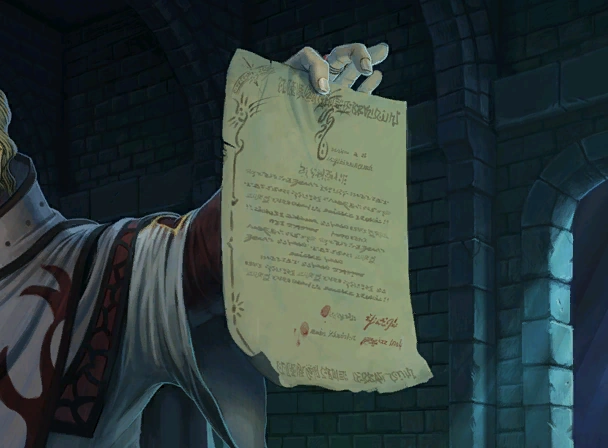
Image result for blood pact fire emblem
While many gamers, anime fans, and armchair movie critics may prefer a more sharply-defined magical system with strict rules and cause-effect relationships, like Fullmetal Alchemist and Avatar: The Last Airbender, this “hard rules” magic system concept is more a modern phenomenon in fiction.  Classic myths and old legends frequently make use of magic, but have much more ethereal rules for them, as with the classic Lord of the Rings and its more modern spiritual successor, Dungeons & Dragons. (I would argue as an aside that it is the proclivity of the stories we are most familiar with to involve vague magic systems that creates such an appeal for the magic systems of FMA and Avatar.) Fire Emblem constantly draws from all kinds of mythologies, but most often from Arthurian and Norse legends--both of which follow “loose” rules regarding magic, where the power of language can change reality. In Arthurian legend stories, if a prophet or a witch utter a curse at someone, the intent of their words comes to fruition. The power of words was a well-understood concept to the original audiences of these stories. Given the borrowing from Arthurian Legend in Tellius (Sir Gawain and the Green Knight, if you need an example), it is not unreasonable to see a similar concept of magic words creating a curse in Radiant Dawn. Bringing the concept back to Fire Emblem’s own internal lore, it is entirely reasonable for books to be the source of spells. After all, mages read from tomes to cast their Wind, Fire, and Thunder spells. If the Blood Pact seems contrived, it is only because it was not explained punch-by-punch in concept. Path of Radiance had already sown the seeds of the Blood Pact concept with Naesala’s and Ashnard’s hinted sudden ascendance to power. The power of words had already been established in the Forest of Serenes with the Galdr of Rebirth. It is my opinion, therefore, that those who do not find the Blood Pact a believable magical concept are being sticklers for a hard-magic rules system that Fire Emblem has never truly adhered to. (And, that those who are Harry Potter fans who insist the Blood Pact doesn’t make any sense should probably question their HP fandom.)

(For a fuller explanation of the hard/soft magic system concept, see Hello Future Me’s videos analyzing literary & anime examples.) As for how the Blood Pact targets a ruler’s people, one could argue it enacts akin to the Familicide spell from Dungeons & Dragons, in which the magic seeks out all beings who share blood with or are related to the target and kills them. In the Medieval world of Tellius, countries are pretty segregated, with each Laguz tribe living separately, and even the Beorc nations tend to stick together as a people group. The magic could seek out those in the vicinity of the Pact-breaker and spread like a wave over the country, and most of the inhabitants would be affected. After all, the Pact is literally set in blood, so the magic already knows what to seek if the contract is broken.


The second major problem Blood Pact critics often have is that the Dawn Brigade epicly flubs its decision to continue fighting Crimea and the Laguz Alliance instead of joining them to smash Begnion. The Blood Pact only kills one or two a day and then doubles it. Surely losing 100 or so people is not a big deal--just wave the white flag, invite Ike and his mercs over to your castle, chug some booze, then kick Begnion in the pants in the morning… Much better than fighting to the death army-to-army when you could be fighting Begnion, right? 
The main flaw in this would-be argument of pragmatism is that it comes from the perspective of someone who lives in a globalized society. It’s no big deal to interact with people from all over the world and to befriend them. Even if your country was at war with theirs a few years ago, you might not agree with the decision your respective leaders made and could manage some peaceful interaction with that person. 

For anyone who missed the memo, the Fire Emblem games do not take place in a globalized society. In the words of NoA’s Bill Trinen of the localization team, Fire Emblem is “Japan’s idea of Medieval Europe.” That means nationalism and feudalism exist in full force. And what continent better demonstrates these ideologies than Tellius? The nations are formed by respective people groups, some of which isolate from those that differ from them, and each people group feels loyal to their own and shuns the “others” until Ike comes along to challenge discrimination of Beorc, Laguz, and Branded. Even then, change is gradual, and each nation is still ruled by a single king or queen (except Begnion, which has a faux-democracy-actually-aristocracy-with-a-spiritual-leader-figurehead thing going for it). When nations war, it’s literally people group against people group, Us versus Them, to the same degree as the World Wars.
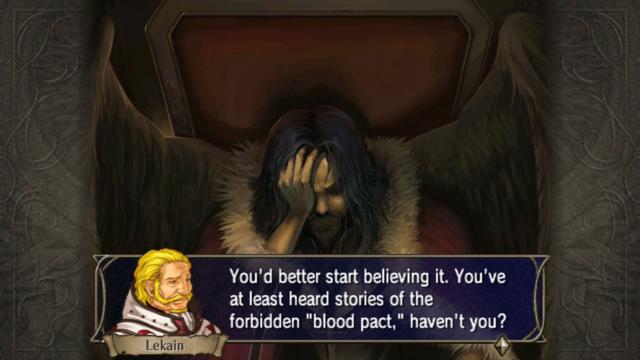
Image result for blood pact fire emblem
Crimea and Daein? They’re not friends. Not even pen pals. They spilt one another’s blood a mere three years before this Blood Pact thing.
Trying to make nice and be buddies is far from anyone’s mind. Except Sothe’s, because he’s Ike’s biggest fanboy outside of the Greil Mercs.
On top of that, this alliance that Daein is supposed to join against Begnion is the same one that has been running with its tail between its legs for the past few chapters because Zelgius kicked Skrimir’s tail. You know what? Joining the losing side to fight the almighty Begnion Empire is sounding better by the second. At the risk of sounding like this is a Straw Man argument, my point is that the “simple solution” is not so simple. And Daein trying to solve things on its own is believable, given the story world… and actual Earth history. 

Because let me tell you, Germany’s Kaiser Wilhelm II makes Micaiah’s & Pelleas’s decision look BRILLIANT. (Make allies with France or Russia or literally anyone besides the crumbling Austrian Empire? NAH FAK ENGLAND THREE FRONT WAR YOLO SWAG. KEEP TORPEDOING THOSE MERCHANT SHIPS, LET THE USA JOIN THE ALLIES, FAK EVERYTHING!!!1~!!1one!)

Nationalism says “nuts” to working with your nation’s hated enemy. And even barring nationalism, no self-respecting nation just turns over and begs their hated rival for help. Unless the Koreas shaking hands and being besties is the fanfiction you’re reading. Stick that wall-of-text in your pipe and smoke it 420BlazeIt style.

Image result for blood pact fire emblem


Marm: So, Daniel’s epic response covers just about everything, but I’ll also add that people underestimate how long this conflict goes for, or how long it’s expected to last for, when considering Micaiah’s and Pelleas’ position when picking a side in the war. The blood pact kills people exponentially when it isn’t being respected. Wars don’t last a couple weeks, you know. They last months, years. Without knowing how long the conflict will go for, they can only try to obey orders and keep their losses to a minimum. It’s entirely unreasonable to think they would do otherwise. Think back to the “Plague” Tanith mentions when she speaks of Ashnard in PoR. She mentions a good percentage of the Begnion / Daein populations were lost, indiscriminately, over the span of just a year. 

Alan: Blood Pacts, like many of the things we see come to light in Radiant Dawn, are seeded throughout Path of Radiance’s narrative. In chapter 18, Crimea Marches, Ike has a base conversation with Tanith where they talk about how Ashnard came to power. They speak of some sort of plague that killed off many citizens of Daein and everyone in the royal line between Ashnard and the crown. In Path of Radiance’s endgame, Ashnard tells Bryce that it was by his hand that everyone between him and the throne, claiming that their deaths that were supposedly caused by the plague were rather caused by his direct actions, which they were, because he used a blood pact for it.

Image result for path of radiance chapter 18 ike tanith

Braden: So beyond what everyone else has already said, I want to address a common issue that I think a good portion of this criticism stems from, which is this idea that plot devices are intrinsically bad. This is simply not the case. Plot devices can absolutely be used poorly, but they can also be used very well, and in the case of RD, I think blood pacts are used excellently. What determines whether a plot device is used well or used poorly depends on two main factors: its believability/how naturally it emerges given the story it comes from, and what is accomplished through the use of it. 

So first let’s talk about the first aspect: its believability. DRP already covered this point extensively, but I’ll add on that its additional relevance to PoR in regards to Ashnard and Naesala strengthens this even further (Don’t worry, I’ll go over specific characters soon). 

As for the second aspect, there’s no question that the use of blood pacts accomplishes a hell of a lot for the story. It sets up conflict, and alongside it, a thematically relevant dichotomy (balance vs extremism) that it uses to send a bigger and more important message. It also allows for an incredible degree of character development for Micaiah, Sothe, and Pelleas, something that would’ve been nowhere near as strong had the conflict been done in some other manner. 
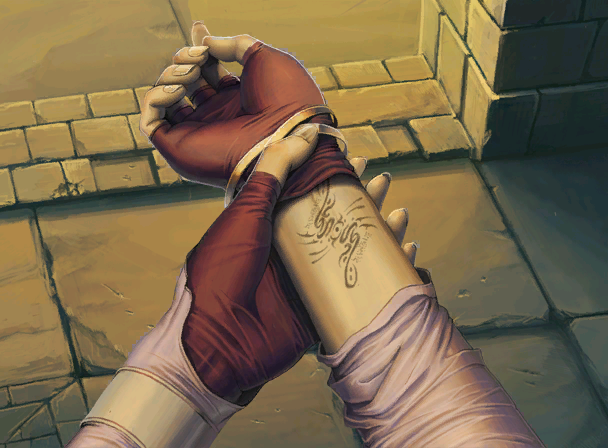
Image result for blood pact fire emblem

Onto characters in particular, starting with Ashnard. I would assume the arguments about blood pacts ruining his character would be on two particular fronts: that it doesn’t make sense for someone who feels so strongly about how people should be able to enjoy the value of their own power and what it can grant them to use an outside power like a blood pact, and that it contradicts what he told Bryce in PoR’s endgame, that everyone in line to the throne died by his own hand. To refute the first is easy: it’s clear that Ashnard has no problem with using an outside power. In PoR he was hellbent on using the medallion’s power for almost the entirety of the game. He seems to believe that when you take the power of something else, it essentially is just an extension of your own. The use of a blood pact wouldn’t really be any different from trying to use the medallion, or his use of blessed armor or his blessed sword, Gurgurant. What he told Bryce in PoR’s Endgame, about everyone in line to the throne “dying by his own hand”, isn’t incompatible with the use of blood pacts either, especially considering what I just mentioned about his feelings on tools of power. Better yet, someone’s critique of blood pacts actually made me realize something about Ashnard that makes a hell of a lot of sense. On one of my streams someone brought up to me the unlikelihood of the blood pact killing the exact people who were in the line of succession before its killings got out of hand, and I realized they were completely right. The conclusion I ended up coming to is that Ashnard used the blood pact to imitate a plague, so that he could kill those ahead of him personally under its guise. This would be even more consistent with Ashnard telling Bryce that they died by his own hand, while also solving the probability issues that would arise with them dying purely to a blood pact.

Pelleas’ and Micaiah’s character are both GREATLY benefitted by their blood pact. Pelleas is just a normal, everyday guy, thrown into a position of leadership when he is completely inept. Yet despite his weakness and inexperience, he acknowledges his shortcomings and vows to do his best regardless. He has a strong sense of duty to his people even though he has no idea how to really lead them. It comes to the point where he is willing to sacrifice himself to save his people, without hesitation. The situation he finds himself thrust into brings out how much he really cares about his people.

Image result for blood pact fire emblem

The same goes for Micaiah. Rather than struggling with inadequacy for her role, her struggle is more moral in nature. She knows what she is doing is wrong, but her loyalty to the Daein people overshadows it. She puts her entire moral compass on the line to protect them. In her own words: “If that's what it takes to be just, then I want nothing to do with justice. I'd rather be hated and feared like Mad King Ashnard. I'd rather the dark god take my soul. I'm going to save my people, Sothe. If the rest of the world paints me as a beast to be reviled and hated, so be it.“ 

Naesala is a bit harder to interpret, and is something that even I still actively think about in order to try and fully understand. The conclusion I’ve come to for now is that Naesala in PoR, being under the blood pact, chose to cut himself off from others so as to make it easier to protect his people. He was similar to Micaiah or Pelleas in that loyalty to his people, I suppose. He succeeded in giving up his moral compass, which is why he remained self-serving even towards his own allies and friends, his fellow laguz kings. When Reyson tells him that Leanne is alive, his demeanor changes. Notice that after that, he no longer battles against Ike’s group, and goes so far as to save Leanne (admittedly due in no small part to Tibarn telling him to) and to stay and fight against Daein at her request. Leanne cracked his facade, and in RD, when Begnion really starts to use his blood pact against his allies, his facade fully breaks. His guilt is outwardly visible, and the consequences of him being under its grip are far more severe alongside it.
Image result for blood pact fire emblem

Grant: I’d like to address the idea that the Blood Pact “ruins” Naesala’s character. I don’t see how it ruined his character in PoR since as far as we know he did everything in that game of his own free will. There’s no evidence to suggest that he was being ordered by Begnion to do what he did there. As for Radiant Dawn it’s consistent with what Path of Radiance showed us to see Naesala commit some act of treachery and yet still not be evil in spite of it. In Path of Radiance he sold out his best friend to freaking Oliver for money, fought alongside Daein and sent Norris’s ship to attack a Begnion vessel while trying to pilfer all the treasure. He is clearly one treacherous dude. And yet, nobody calls him evil. Naesala manages to atone for all the bad things that he did by rescuing Leanne or helping Ike defeat Ashnard (you can choose to call upon him if the player does not defeat Ashnard with something like Wrath / Resolve Ike). 

Image result for naesala radiant dawn blood pact

It makes sense to me that Radiant Dawn would have Naesala commit an act of treachery without being evil. One of the main ways a Fire Emblem story keeps a character sympathetic while also committing heinous acts is to usually strip that character of their agency. Lyon is a prime example of this. Alvis is another example of a character who was blackmailed into doing what he did. So it seems to me that the writers wanted Naesala to betray the Laguz Alliance without turning evil. The answer? Force him to do it via Blood Pact. In light of everything we’ve discussed about the Blood Pact it makes perfect sense to me for this to be the avenue the story would pursue. 

Some people also take issue with the fact that Naesala inherited the Blood Pact. Again this makes perfect sense to me since Naesala is supposed to be a shrewd and crafty character. There’s no way that someone could feasibly trick him into signing one. 

COMMENT WARS: Episode 1 - Braden vs. Guy


Defense Against the Dark Criticisms Part 2: Other Character Criticisms

Criticism: “Lucia should’ve died- any growth Elincia had in being willing to live with her friends death is null when it doesn't actually happen. At that point, Elincia's speech to Ludveck becomes naught but honeyed words. Furthermore, having Ike bail her out in the end is a REVERSAL of growth from PoR, having her need to be saved by him when her character arc in PoR had her taking up Amiti and fighting on her own terms, no longer having someone else do the fighting for her.”


 Grant: I’m going to need to break this response down into several components because there’s a lot to unpack here.

Response # 1 - This Criticism Does Not Accurately Identify Elincia’s Character Arc
                  In Path of Radiance we see Elincia transition from a helpless, sheltered princess into a confident ruler. Claiming that her arc is about “no longer having someone else do the fighting for her” or “fighting on her own terms” doesn’t make sense. She had to rely on The Greil Mercenaries, Gallia and Begnion to do all the fighting for her for the entire game. Elincia never “fought on her own terms” in Path of Radiance. Someone else was always doing the fighting for her.  

                   A more accurate interpretation of her character arc would go along the lines of this: “Elincia’s character is about her growing into a strong, confident leader. A major characteristic of this is how her leadership abilities are forged by trial and tribulation.” Something that Radiant Dawn, and Part 2 in particular, does very well is expand on this. We see Elincia become a leader who’s far bolder than before and willing to make the hard calls when she needs to. 


Response # 2 - Ike Does Not Bail Elincia Out 
       Ludveck had already been beaten and was in jail by the time Ike showed up to help. Elincia held out when Ludveck besieged her castle and the Crimean Royal Knights defeated Ludveck’s rebel forces. The whole reason why Lucia was in peril in the first place was because the Crimean rebels were trying to free Ludveck. The whole point was that if Elincia didn’t free him they’d kill Lucia.

                  Elincia was never in peril and didn’t need saving. She already won. Not only that, but the rebel plan of holding Lucia hostage wasn’t going to work either. So the rebels failed all before Ike had his big moment. It feels more like Ike just cleaned house after Elincia did the hard part. Braden summed it up really well in a conversation we had prior to me writing my response:

“Ike showing up was basically Bastian appearing with reinforcements and trumping Ludveck's trump card” 

Response # 3 - Elincia’s Character Growth Is Not Dependent on Whether Lucia Lives or Dies
         The big Elincia moment at the end of Part 2 is when she refuses to free Ludveck. She knew what was at stake when she made that decision. She didn’t know that Bastian had hired the Greil Mercenaries so she thought Lucia was going to die. And Elincia still made the choice. That for me is indicative of her character growth. She made the right choice, even if it was super hard for her on a personal level. In case this wasn’t made clear enough Part 3 gives us another moment like this when she declares Crimea’s neutrality in the war between Begnion and the Laguz Alliance. In case this hadn’t been made clear enough we see Elincia do this again in Part 3 when she lays down her sword in the middle of a battlefield refusing to fight for either Begnion or the Laguz Alliance.


Image result for elincia lucia fire emblem

Marm: No character ever needs to die, and an author that tells you otherwise hasn’t mastered their craft yet. Character deaths can be interesting. They can be unexpected, make you feel terrible or oddly satisfied. There’s no question that they are incredibly useful and versatile narrative tools. But they are not necessary, and this is especially true when it comes to playable characters-- especially in games like Fire Emblem.

Why? Let’s ignore the story ramifications for now. Killing off a playable character has meta consequences in a video game that go beyond the loss of a narrative role. The death of a playable character means losing access to the use of said character. 

This is not always a problem-- in some games, characters do not play differently from one another, or another can come along to replace the lost party member with identical (or near identical) skills. In that sense, you can replace what you’ve lost. You could make a case that Fire Emblem Radiant Dawn gives you plenty of Swordmasters to compensate, even. And you still wouldn’t be right.

See, the difference between most of those games and Fire Emblem Radiant Dawn is two fold. One is that this game is at its core about managing resources. In other words, you are given limited resources to spend, and it is your job to distribute them wisely. Effectively, the narrative death of this playable character implies some players will be unjustly and arbitrarily punished for investing resources into Lucia, which would directly lead to a worse experience and, thus, a worse game. (Incidentally, this is an [avoidable] offense in Fates, where you can lose Kaze for some reason).
Moreover, most other games allow you to grind, which is not a feature present in Fire Emblem Radiant Dawn (not by any conventional means, at least), which effectively means that there’s no efficient method to recover lost resources. Which brings me to point 2.

Image result for elincia lucia fire emblem

Character death in Fire Emblem is meant to be a punitive incentive. It is supposed to be a consequence resulting from the player’s poor plays (or poor luck). Killing off playable characters within the story trivializes this essential aspect of the Fire Emblem experience. 

But enough with the gameplay ramifications and back to the narrative. 

Character (and personal) growth is not something that disappears. Let’s work with an analogy here. It’s about to get dark and real for a bit.

There is a woman named Jennifer. Jennifer’s sister is deathly ill, and is undergoing a risky surgery at the hospital soon. Jennifer cannot imagine living without her sister, and suicidal thoughts start popping into her mind. What if she doesn’t survive the operation? She couldn’t take it. There’s no way she’d take it. She doesn’t even want to imagine life without her. 

Then comes the day of the surgery. After many excruciating hours, the doctor comes in and informs the family that Jennifer’s sister didn’t make it. Her world goes dark. Immediately she thinks of killing herself-- she had thought of many ways to do it within the past week. 

But then she sees her parents, devastated. They need her. How could she even think about leaving them all alone?

Jennifer gains the resolve to live through adversity and be there for the people she loves, even if it means living hurts. It happens, all of it, within an instant.

And then, a dozen or so minutes later, the nurse comes in. A miracle has occurred and the sister woke up. The surgery was a success after all.

Does her sister’s survival invalidate her experience? In the span of minutes, she experienced grief, wishing for death, remorse and then found new resolve for marching on through life. 

Image result for elincia lucia fire emblem

This one incident changed her, regardless of her sister’s survival. The way she’ll live and look at life will never be the same after this.

That’s basically what happened to Elincia. She avoided doing so for the longest time, but forced to make a choice, she decided that Crimea was more important to her than Lucia, the person closest to her. This isn’t a decision she can take back. Her relationship with her retainers, and Lucia especially, will forever be changed. She’s accepted the fact now that she is responsible for their lives. There may come a time when she has to ask one of them to die for her. And it’s established between them that, should she ask, they will comply. Lucia would have died for Elincia, and as much as Elincia hates it, henceforward it’s an option she must always consider. It’s an event that changes Elincia’s character to its core; she’s still a pacifist, deep down, but she loses her young naivetée in that she recognizes now that she must administer death if she wants to protect the things she cares for; the death of the rebels. Ludveck and his cohorts must be put to the sword, and she will have the army carry this out in official capacity. 

It is in that moment that Elincia truly became the Queen of Crimea. That she accepted the full weight of her responsibilities. 

As far as fighting her own battles go, this is actually an extension of her PoR story arc. Elincia is not meant to be fighting her battles on the frontline, she’s meant to be fighting them on the political stage. While one is not exclusive of the other, it does imply that she must learn to direct and lead her military assets in a way that brings victory to her nation. To an extent, Elincia becomes Crimea, and all her people’s exploits are her own. Her personal conflict sees her range of influence and responsibility grow along with her. Just herself until Ike finds her, then it extends to the greil mercenaries, the Crimean liberation army and, finally, the very nation of Crimea itself. Her battles are Crimea’s battles, not just her own. So, really, Ike didn’t save Lucia. Bastian did, by hiring them. But Bastian did so in the name of his Queen, Elincia, and so Elincia saved Lucia. That’s what it means to take responsibility for your subjects’ actions. It also means that Elincia was responsible for Ludveck’s revolt. She was responsible for Lucia’s capture. It all comes back to her. That’s what it means to lead a nation.

Image result for elincia lucia fire emblem

Evil Overlord Darius Pent: Elincia’s totes a regressing character when she tells off both the Laguz Alliance and Begnion while giving Tibarn the biggest bird boner since Captain Falcon command-grabbed Zero Suit Samus for the first time.

______________________________________________________________________

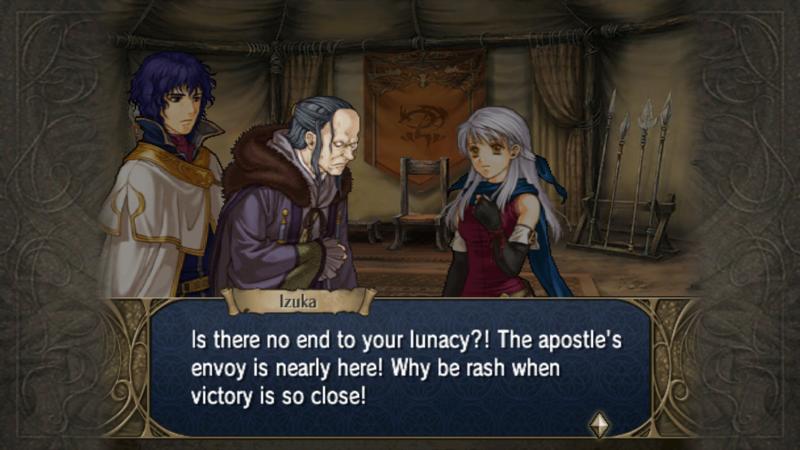
Criticism: “Why the fuck did Pelleas just take Izuka’s word of him being Ashnard’s son and Pelleas REALLY should of taken Izuka out of “office” after he gave Muarim that drug. Also, how does Almedha not know her son’s own name?! Even if I haven’t seen my own lost child for 20 years, i’m not just gonna forget a name i decided to give to my own fucking child.”

Evil Overlord Darius Pent: Well for starters, being Ashnard’s Dragon Whore is scientifically proven to cause brain damage. This also applies to the entire Fates cast, except replace Ashnard with Vegetable.

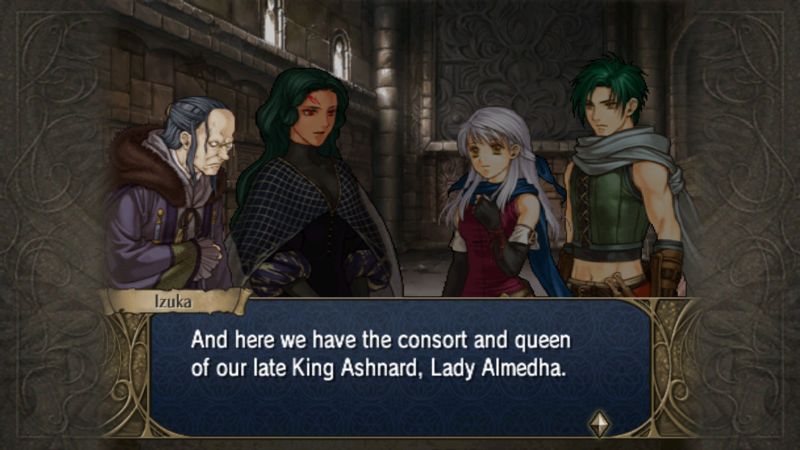
I think we need to give Pelleas his own 15 minute section to really address all the converging so-called issues with his character and role. Someone--myself, Marm, whoever--needs to explain to these hip college kids that back in ye olden tymes, not everybody could read and write. Pelleas is an orphan commoner who still learned to read and write some, but is not a legal expert like Lekain & those other Begnion bastards. Of course he has the potential to misread it. And even if we, the audience who played PoR, know Izuka’s bad news, this is the same dude who gave him a new life involving NOT dying in the streets as a commoner starving to death in Daein and who “reunited” him with Almedha. Pelleas was given zero training for the job he was given. He also lacks leadership skills, but he tries. He does have the balls to DIE FOR HIS COUNTRY when he thinks it will solve the problem he inadvertently caused. But I guess that doesn’t count for anything. SMH


The kid’s hardly MVP vote material, but I think people just like shoveling crap onto the poor guy.

Image result for pelleas, izuka, almedha


Braden: Izuka approached Almedha and brought her to Pelleas, after finding Pelleas first. He intentionally deceived her and Pelleas both. In Pelleas’ position, what reason would you have to not believe that you have a mother who loved you, after being an orphan for so long? Would you even want to believe that it wasn’t true?

I talked about the response to Izuka drugging Muarim in some comments section way back, so I’ll copy paste what I said here: “There was potential for dramatic irony (the player knowing that Izuka was behind the existence of Feral Ones while the characters didn’t), but the lack of the cast's knowledge of Izuka plays into the game's plot. No one actually knows that Izuka created Feral Ones, as he admits this in PoR in a monologue that no other character hears. The player, instead of questioning whether or not he is evil, is questioning what his motivations must be. "Who is he trying to help? What is his goal?" When you see that he and Micaiah are having disagreements, someone who has played PoR should probably start to worry about what he might do. It leaves you in suspense at the very least. Him drugging Muarim isn't really supposed to be a surprise, as he admits it almost immediately after that scene. 

Image result for pelleas and izuka

Pelleas, Micaiah and the others don't know he's evil, they just know he's pretty shady and has questionable methods. But in the position they're in, they're willing to have whatever help it takes to save Daein, even if his motivations are purely selfish. This is also why people tolerate him trying to drug Muarim. They understand that it's all of Daein at stake, not just their feelings towards Izuka being a dick. So they grin and bear it for the sake of their goal. Pelleas tries to keep the peace after the incident both out of acknowledging this and out of a sense of debt to Izuka for rescuing him from his life as an orphan. You have to look at it from his perspective: it’s only thanks to Izuka that he went from living in an orphanage to having a loving mother, to being royalty. He feels he owes him a great deal.

Pelleas trying to ask forgiveness for Izuka after what he’d done, for reference:

“Pelleas: Everybody! Wait, please! Izuka clearly did a terrible thing to that sub-hum--that laguz, I apologize. Tormod... I'm truly sorry. He will not use the drug again. So, please... Try to forgive him... Micaiah: Prince Pelleas…”

_________________________________________________________________

Criticism:Why do people give Corrin crap for being stupid but not Skrimir? Why does Skrimir get a pass?”

Image result for skrimir

Alan: Because while Skrimir is a dummy, he’s a side-character and he gets called out by several more prominent characters in his game. Said call outs even cause him to stop being a stubborn ass while Corrin is hopelessly naive, gets told he IS hopelessly naive, but then also told that he’s charming because of it and that’s the reason everyone can trust him.

Grant: Skrimir’s flaws are treated as flaws by the narrative of his game. Corrin’s flaws aren’t. Their arcs go in completely different directions in their respective stories, which leads to different reactions among the fanbase.

When Skrimir shows up, he’s immediately called out on his bullcrap by multiple characters. Soren and Ranulf do it the most, but Ike and Titania also show their displeasure at the things he says and does. Skrimir’s flaws lead him to make a major mistake that has negative consequences. Later on in the game he learns from this and grows as a character.

Corrin, by contrast, never has this happen to them. None of their flaws are presented in a negative light. As Alan’s answer already mentioned the other characters in Fates actually think that Corrin’s naivete and stupidity are endearing. This prevents Corrin from experiencing character development. Why would you change if you don’t believe that you need to? 

Related image

 The presence of flawed characters does not constitute as bad writing. It’s how the narrative treats these flaws that separate the good stories from the bad ones. Skrimir’s flaws are used as a means to give him character development. Corrin’s stupidity and cluelessness are actively rewarded by the narrative of their game, which prevents them from ever needing to change. 

This is one of many reasons why I find the comparison between Fates and Radiant Dawn to be entirely unwarranted. The narrative in Fates bends way over backward to prevent its precious little snowflake from being portrayed in a negative light. Radiant Dawn also has an “idiot ruler” on the side of the good guys, but that game actually gives said “idiot ruler” character development. That’s a pretty big gulf in terms of the quality of writing between the two games.  

Image result for skrimir

Evil Overlord Darius Pent: Because he’s not a damn vegetable that bangs the entire cast. At least Skrimir develops, and on top of that, he has actual agency and makes decisions. Awful ones. But Corrin pretty much just goes with the flow while magically keeping every enemy soldier from dying while conquering Hoshido to solve the world’s problems. Actually, that Blood Pact Catch 22 sounds like a lot more compelling an issue by comparison. 

Pretty sure Skrimir never got a “free pass.” The fandom just never hated him back when RD released (that I know of) because players understood his role in the story and his contribution. Given his character growth, there was no need to spew a hatestorm about him. 

But, fine. You want to criticize his idiocy. He causes all these problems! He’s intolerable! Go ahead and say it, you’re not wrong. I just don’t understand why you care that other people aren’t talking about this supporting role character and criticizing him 11 years later as much as we criticize a main character from the 2nd-most-recent game. Skrimir screwed up a major battle and immediately regretted it, and learned to adapt a little bit later. He doesn’t drive the entire story like Corrin is supposed to (while failing to actually propel any kind of narrative forward, mind you).  

Image result for skrimir

Braden: Guy and I were the ones who got into a comment war over this on main, the link is here: https://www.facebook.com/photo.php?fbid=10210326955553592

If you’re in main, go have a look at his comment and all the replies.


Grant: Braden linked to a Skrimir character analysis on reddit that talks about the points we covered. Here’s the link for those of you who are interested in reading it:


I also made screenshots over Braden and Guy’s comment war in the link Braden sent. They’re going to be in the next post to this one. I only took screenshots of the relevant stuff, but there were so many comments that if you want to see the full comment thread you should click on Braden’s link. 

Defense Against the Dark Criticisms Part 1: Ike And Micaiah

Image result for ike and micaiah

Criticism: Ike hijacked the story from Micaiah 
Marmotte: This would be true had this been intended to be Micaiah’s story, or Ike’s story, however it is not. Radiant Dawn is Tellius’ story. It’s a story about how all the different world powers came to go at war and, later, how they came to unite under the same banner to defeat a common foe. The story puts the focus on a few characters, it is true, but that’s in order to give all the proper angles as necessary. We wouldn’t be switching between Micaiah’s and Ike’s points of views otherwise.


Grant: In order for this criticism to be true we have to accept the premise that Radiant Dawn was meant to be only Micaiah’s story. I do not accept this premise at all. There’s no evidence to support the idea that Radiant Dawn was meant to be only one character’s story. . I would argue that there are 3 protagonists: Micaiah, Ike, and Elincia. The major arcs in the game revolve around them and their struggles. Radiant Dawn is set up so that we bounce between different points of view. Another element that bothers me about this criticism is that when Part 1 ends we don’t jump immediately to Ike’s story, we follow Elincia. Why is Ike criticized for “hijacking” the story when Elincia and Yune are just as much to blame for the “hijacking”? If you’re going to criticize something then at least be consistent in your criticism. Nitpicks aside Radiant Dawn, like other Fire Emblem games, clearly has multiple protagonists who play an important role in the story. None of these characters “hijack” the story from each other. The story is supposed to be about multiple people.

Braden: Like Marmotte said, RD is not Micaiah’s story. It takes the world established by PoR and tells a tale on a wider scale using it. Though the Tellius characters are revered as some of the best in the series, in RD they are but vehicles through which we both see plot events unfold and ideological positions face off. By the beginning of Part 4, where those who make this argument would likely say Ike has “fully hijacked the story”, the parties all join as one, with Ike as the figurehead. 

I’ve also legitimately seen people argue that Micaiah being on the game’s cover art establishes her as the main character, which Ike then robs her of. To make that claim is a fault of the biases and presuppositions of the person making it, not of the game itself. Radiant Dawn in the game itself doesn’t establish Micaiah as being anything but of equal importance to Ike.

Alan: The thing about Radiant Dawn is that it’s a world oriented narrative rather than a character oriented narrative - with a focus on what goes on in the world of Tellius rather than the individual story of a hero searching for his father or trying to reclaim his birthright or some such. With a much grander and less personal focus than many Fire Emblem games that we’re accustomed to, it’s impossible to directly nail down any one character as the main protagonist, since that mantle gets shared by all of the major playable characters that get to be the heads of any particular part of the story. Honestly, you could argue that Ike gets some of his part hijacked by Micaiah and the Crimeans since they take up chapters during Part 3 were there merit to this type of argument for this kind of narrative.

____________________________________________________________


Criticism: Radiant Dawn “demonizes” Micaiah for disagreeing with Ike

Grant: Claiming that Ike and Micaiah “disagreed” with each other is a gross misrepresentation of what actually happened in the game. An example of a disagreement is me saying that Holy War is the best Fire Emblem game and Braden saying that Radiant Dawn is the best Fire Emblem game. Radiant Dawn didn’t portray anything like that. Ike and Micaiah fought on opposite sides of a war. They led armies who tried to kill each other! That’s above and beyond disagreement. More importantly, Radiant Dawn goes out of it’s way to keep Micaiah and the Dawn Brigade sympathetic even as they’re fighting against Ike and co. The whole reason why Micaiah’s fighting Ike is because Daein was forced into the conflict. If Micaiah doesn’t fight, then innocent Daein people die. When it comes to motivations it doesn’t get any more sympathetic than that. Plus do we ever see Micaiah do something genuinely evil? I can’t think of a single point in the story where this is the case. It’s true that Daein is on the wrong side of the war but that has nothing to do with Ike. The reason why Daein (and therefore Micaiah) is on the wrong side of the war is because they’re fighting on the same side as Begnion. In stories with black and white moralities fighting along with the bad guys generally makes you a bad guy. This isn’t the case with Micaiah or Daein who the story makes it clear are being forced to fight.

Related image

Marmotte: I’d go so far as to argue the opposite; Micaiah is portrayed as a type of martyr, in a sense, and she is idolized as an angel. I’d go so far as to say Messiah. Which is not exactly inaccurate, either, seeing she is Yune’s messenger and possesses the skill sacrifice. The theme of sacrifice is important to Micaiah’s side of the story: She is resolved to make the necessary sacrifices to lead her nation to victory, but she never gives up on her humanity. She won’t let Izuka use poison, for instance. She is protective of Sothe . Twice, she heads directly into a trap so her allies don’t have to; once in the swamp chapter and the other when she is tracked down in the night by Jarrod. What is true, however, is that she *is* presented as a legitimate threat to the “good guys”. Her actions are erratic and make little sense on a macro-political scale to her opponents. Her tactics manage to claim the lives and, most importantly, the time of the allied Laguz armies. She did come close to losing that “pure” aspect of hers after the traps she laid for Sanaki’s escort, but ultimately she isn’t able to cast aside Sothe and go through with it. Micaiah’s first part in the story is to show the consequences of the “good guys’” actions. They’re the ones who forced her into this situation in the first place, in a way.

Image result for ike and micaiah part 3


Braden: I assume this idea is referring specifically to Part 3, where Micaiah ends up being forced to take a side she herself doesn’t believe in the ideals of. I wouldn’t label this as demonization at all, as Micaiah has it far harder than Ike does. Ike gets to choose what and who he fights for, and that lets him confidently take the risks he takes in order to do so. Micaiah has no such luxury, and has to fight for an ideal she doesn’t believe in or lose everything she holds dear. This situation is completely intentional, alongside its contrast with Ike’s. Both Ike and Micaiah hold the same ideals and would fight for the same thing given the opportunity, but Micaiah is weighed down by too much order (in the form of the blood pact). RD posits that fighting for your beliefs is sometimes necessary, that conflict is not intrinsically evil, but a necessary part of how humanity grows. What’s important though, is the nature of this conflict. It must be for the sake of genuinely held beliefs, and not without conviction.

This complaint could also refer to Micaiah and Ike’s conversation in Part 4 Endgame, to which I would say that her telling him Sothe was right about him doesn’t indicate that she was on some “wrong” side all along when it comes to Ike, but it just refers to how she’d originally thought of him. In Part 1, she was a bit annoyed by Sothe’s praise of him because she saw him as being indirectly responsible for Daein’s plight. It wasn’t in the sense that she directly blamed him; she isn’t that naive. When people are hurt, they always try and look for a cause, for a reason, even when sometimes there isn’t a clear one. Having that reason helps to cope with the situation they find themselves in, and that’s what it was like for Micaiah. The conversation in Part 4 with Ike is just her acknowledging that her mild indirect blame for Ike was just that: a need for something to blame. She understands now that they are more similar than she’d even thought possible.

Image result for ike vs micaiah part 3

Alan: Just because Ike and his allies look at the things that Micaiah does and act horrified and confused due to her choice of tactics and the zeal of her homeland defense does not mean that the game intends for us to adopt the viewpoint of Micaiah as a demon. Ike, being a character who can only see things through his own perspective, may be appalled and unable to determine why she’s acting the way she is, but WE the omniscient third party observer have the ability to see the reasoning behind Micaiah’s actions. She’s a cornered animal, desperately trying to help Pelleas, and therefore Daein, escape their forced servitude to Begnion’s senate while being forced to lash out at Ike in desperation due to her situation. We can sympathize with her plight and justify cruel tactics because of how brutally effective they would be because we can see everything that’s pinning her and her countrymen down.

TLDR: Even though Ike sees Micaiah as unreasonable, we aren’t pigeonholed into Ike’s perspective on Micaiah

Criticism: Micaiah is a Mary Sue / Ike is a Gary Stu


DRP: This point goes so well with the one above about how the endlessly beloved Mary Sue character is demonized for not respecting Ike outright. Something something cake, something something eat it too.

Please actually read fan fictions before slinging out this term willy-nilly. Being of few words and powerful is not the same. He has limits, he relies solely on Soren for strategy, and political leaders for politics. So really, he’s just the best blade on the continent with strong leadership skills. But hell let’s bitch about it anyway.

Marm: This is a comment against both the Mary Sue and Gary Stu arguments. Basically, the trope is defined by the characters being “too perfect” or idealized, power fantasy projections of the author. Ike and Micaiah are neither of these things; as pointed out earlier by the others, Ike makes few mistakes, but that’s because he’s learned to rely on the right people for the right things. Basically, he’s grown wise enough to give and take, and he’s not nearly as brash as he was in the early chapters of PoR. He’s genuinely experienced now. He still has a number of personal flaws and shortcomings: he’s unapproachable and severe-looking, his word choice is sometimes fairly poor, etc. 

As for Micaiah, she lets people push their agendas on her, every other action she does, every other decision she makes  is desperate. She’s emotionally and mentally exhausted for half the game-- and she fails. So does Ike’s army, for that matter. For gameplay and story integration purposes, we’re only ever given the side of the winning army, but it’s important to remember that canonically, both sides have their own wins and losses. 


Grant: It’s hard to take either of these criticisms seriously when we live in a post My Unit franchise. The only characters that I’d consider “Mary Sues” in Fire Emblem are the My Units. Before digging any deeper let’s define what a Mary Sue is. Mary Sue is a term that referred to fan fiction characters who were usually self-insert characters that were treated as either perfect or unintentionally flawed characters. Generally speaking a Mary Sue is also characterized by warping the logic of the story to fit around them. Someone I follow on a Q & A website called quora.com recently gave examples of the Mary Sue that demonstrate my point:

“Malfoy will go the whole story without saying the word “mudblood” or acting snotty, mostly due to the fact that he’s constantly infatuated with the Sue;

Spock will speak in florid prose instead of plain and sterile vernacular, especially when referring to the Sue;

McCoy will call Kirk by his title instead of calling him “Jim,” which has nothing to do with the Sue, but that’s why the author gets it wrong;

He and Spock will agree with each other frequently, especially when referring to the Sue;
Jill Valentine will suddenly acquire hobbies, and they’ll coincidentally be exactly the same as the author’s and the Sue’s;

Nemesis will retain a personality beyond saying the word “STARS,” and will turn into a good guy, all because of the Sue;” 

Source: https://www.quora.com/Why-is-the-term-Mary-Sue-so-overused-and-misunderstood-recently/answer/Mike-Prinke


So do Ike or Micaiah fit the definition? In my opinion no. DRP and Marm have already pointed out that both of them have lost battles and failed at different things. Ike has had to learn that it’s not a good idea to be brash in Path of Radiance and has had to rely on Soren and Titania.

 Furthermore, the narrative doesn’t treat them the way that the My Units are treated in their games. 

Neither Ike nor Micaiah can bang the entire cast. Micaiah only gets one ending with Sothe in terms of romance options. Despite the crazy amount of Ike x Soren shipping there’s no evidence to suggest that it’s canon. Ike has never really had any kind of romantic inclinations at all for anybody.

 You can disagree with them and not be vilified. Look at how Conquest treats Takumi’s dislike of Corrin. It’s portrayed as wrong and over-the-top, even though Corrin’s invading Takumi’s homeland and there’s no valid reason for Takumi to trust Corrin. We’ve already answered the criticism of Radiant Dawn “demonizing” Micaiah too so using that as a response to this point doesn’t work. 

Having magical abilities and being good at things that matter (like swordplay) does not make someone a Mary Sue. 

Braden: I don’t really have much more to say on this that the others haven’t already mentioned, but I’ll put it simply. Micaiah is an inversion of what a Mary Sue is: she has unexplained gifts and powers, and despite them is still rendered powerless. In the end all her powers are explained and given story relevance. As for Ike, he is the logical conclusion of his growth in PoR. Some of his flaws as a static character is not necessarily a bad character, or a Gary Stu. Some people prefer dynamic main characters, but Ike didn’t really have any more growth to undertake. Instead, his purpose was as a central pillar for many other cast members and plot points to develop around; a steady ground in a torrent of Tellius’ ever changing world throughout RD.
___________________________________________________________________

Criticism: RD Ike is a flat character

Image result for radiant dawn ike

DRP: Not as detailed as his PoR story line, for sure, but I would argue more Static than Flat. And he was already a mostly-static character even in PoR, as we proved. RD really just shows the outcome Sephiran references at PoR’s conclusion. I will grant that I wish he had been tested more at least emotionally, like when he duels Zelgius again and reflects on Gawain.

Marm: Ike isn’t flat, he’s just not in focus. Basically, this is Ike post PoR development. He’s become the man and leader we knew he would become, he has gained the experience he lacked, and he’s grown more confident. He has one remaining drive: Trying to live up to his father’s legacy. Everything else about him is still the same layered character we learned to love in PoR: A genuinely good and caring person, who doesn’t let discrimination go without speaking up, serious in looks and demeanor. We just don’t see him lose himself to anger or make rash decisions anymore. He’s grown past that. 

Alan: Have you seen those muscles? Nothing flat about those. For real, though, Ike finished Path of Radiance as a badass with a legacy behind him and a much cooler head than before. It makes sense that we wouldn’t see him develop more when he’s already a developed character.

Braden: Like I said before about calling him a Gary Stu: “His purpose was as a central pillar for many other cast members and plot points to develop around; a steady ground in a torrent of Tellius’ ever changing world throughout RD.”

Grant: Being static is not the same as being flat. As everyone else pointed out he’s already gone through his character development and his purpose in the plot this time around is different than in Path of Radiance.

___________________________________________________________________

Criticism: Micaiah's Blind Patriotism

DRP: Nationalism is a thing in medieval times and beyond. See: Actual history

Marm: Besides, Micaiah isn’t exactly motivated by patriotism. Case in point, she was ready to abandon Daein after helping her get back on her feet. She never intended to stay as the general, gain ranks, or even to lead the country. She’s not even Daein herself. She’s motivated to move against injustice. She made Daein’s plight her own.

Braden: It’s not blind patriotism at all, it’s a devotion to the people of Daein who treated her like a person and made her feel like family, in a world so hostile to the Branded. In their time of weakness after the Mad King’s War, everyone had to stick together to survive. It was that kind of compassion and caring for their fellow human that made her so attached to them.