Sunday, January 1, 2017

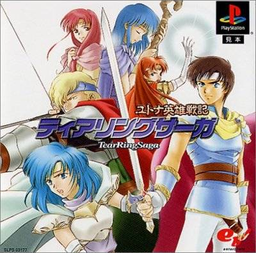
Tearring Saga Chapters 6 - 10

                Here’s another update by yours truly on Tearring Saga.

Pros


  • Narron is a beast! He’s a clear cut example of an Est done right. In fact, he might just end up holding of “Best Est”. I’m really glad I listened to everyone who told me to use him and I’m amazed that the best unit in the game is an Est archetype. Well done Tearring Saga. Well done indeed.

  • Here’s what I think of the map design from about Chapter 5 onward:

  • Chapter 5: I appreciate the little corridors down at the bottom where you had to split your army up in half single file. Unfortunately the downside here is that there’s a pretty big open space after that.

    http://fireemblem.wikia.com/wiki/Beyond_The_Legend


  • Chapters 6 & 7: Wonderfully designed chapters. Your army is split up into smaller groups, both chapters throw enemy reinforcements in places that encourage the player to play faster and the enemy positioning is fairly well done. Before I forget I really liked how the boss in Chapter 6 was designed. He 1 shots your weaker units, 2 shots everyone else and can tank anything that isn’t Runan’s Rapier, magic or Raquel’s Master Bow.
  • Chapter 8: Treasures all over the map. Pirates are positioned in different spots and there are multiple ways to approach this map. It feels like a step down from 6 & 7 but still better than 5. The main problem here is that the enemies are FE 8 levels of scrub (this point will be addressed later in this post)

                       http://fireemblem.wikia.com/wiki/Holy_Dragon_Neuron

  • Chapter 9: Not a fan. It’s mostly an open field with enemy reinforcements that could be easily blocked off. Sure you have some bushes and terrain but for the most part it’s an open field.

                                          http://fireemblem.wikia.com/wiki/Two_Paths

  • Chapter 10: Actually I like this level. You have enemies charging at you from the north while there are recruitable mercenaries from the town that could also swing at you. There’s an interesting event regarding one of your healers that could have some fun long-term consequences. I like stuff like that so this chapter gets kudos from me. There’s also a character recruitment trade-off that seems interesting (although the wording behind said recruitment seems confusing to me, but I think I know what the idea is and I’m a fan). There’s lots to do and terrain is implemented well again.

                                 http://fireemblem.wikia.com/wiki/Freedom_and_Justice


                          Map Design Summation: With the exception of 5 & 9 the map design seems pretty good to me. There’s interesting stuff going on, the terrain is usually well implemented and some of the concepts are at least interesting.


  • Enemy AI: I really like the fact that hurt enemies will retreat in order to get healing. It’s totally preferable to enemies that zombie charge you like the ones in Awakening.

  • Skills: This game has the skill system! Skills are cool! Although I wish that there were some way to click on the skills to see what they could do rather than look them up on serenesforest.net.

  • Holy War Style Talk Alerts: Like Holy War, Tearring Saga will inform you in some way about who needs to talk to who in one of the characters menus. I appreciate little touches like that.


Cons

  • Scrubby enemies: I have to say I’m a little disappointed at how easy these enemies are to kill. Most enemies will easily have below 0 Attack Speed which doesn’t make it all that difficult to kill them. The zombie chapter is incredibly easy. Here’s a picture I took of the average zombie in that level:


                              Yeah, zeroes all across the board. That’s pretty lame. Unfortunately the enemy reinforcements are positioned in such a way as to encourage grinding. In fact, that’s exactly what I did: I got my Pegasus Knight and Sasha 3 whole levels from this chapter while also providing additional level-ups for guys like Narron and Zieg. Unfortunately most enemies in other levels aren’t that much stronger either.

  • Clunky World Map: Also not a fan of the clunky world map so far. You’re only ever given one route to go and it’s pretty obviously where you need to go. Maybe I’m just being impatient and need to wait until later on.

  • The Arena System: This game has an abusable GBA styled arena system.


                        Overall: I’m still enjoying this game. There’s plenty of nice little touches that make it all the more enjoyable. It’s not perfect (no Fire Emblem game is) but the positives definitely outweigh the negatives.

Rough Draft Dark Crusade Battle Formula

Weapon Triangle
  • Physical Weapon Triangle: Swords & Hidden Weapons > Axes & Bows > Lances & Chain Weapons > Swords & Hidden Weapons

  • Magical Weapon Triangle: Anima > Light > Dark > Anima

Weapon Triangle Bonuses
  • Swords & Hidden Weapon Bonuses Over Axes & Bows: + 20 Crit. (- 20 Crit Evade for Axe and Bow Users at WTD)

  • Axes & Bow Bonuses Over Lances & Chain Weapons: + 30 Avoid (- 30 Avoid for Lances & Chain Weapons)

  • Lance & Chain Weapon Bonuses Over Swords & Hidden Weapons: + 6 Defense (- 6 Defense for Swords & Hidden Weapons)

  • Anima Magic Weapon Triangle Advantage: + 20 Crit ( - 20 Crit Evade for Light Magic)

  • Light Magic Weapon Triangle Advantage: + 30 Avoid ( - 30 Avoid for Dark Magic)

  • Dark Magic Weapon Triangle Advantage: + 6 Resistance ( - 6 Resistance for Anima Magic)

  • Miscellaneous Bonus: Bonuses that come from Supports, Terrain, Skills, the Weapon Triangle, Leadership Stars, etc.


Double Attack
Attack Speed: Speed - (Total Item Capacity - Constitution, 0 if negative)

Double Attack if: (Attack Speed – Enemy’s Skill) >= 4

  • If a unit double attacks another unit the second strike will deal half the damage of the first strike unless the double attacking unit is a myrmidon or a ninja.

Damage
  • Physical Damage: Strength + (Weapon Might x Effective Coefficient) + Weapon Rank Differential +  [ (Attacker Constitution - Defender Constitution) / 2 ] + Miscellaneous Bonus(es)

  • Magical Damage: Magic + (Weapon Might x Effective Coefficient) + Weapon Rank Differential +  [ (Attacker Constitution - Defender Constitution) / 2 ] + Miscellaneous Bonus(es)

                        Weapon Rank Differential: The difference between the weapon ranks of the weapons being used by the two enemies x 3. For example: If a character with a D rank weapon attacks a character with an E rank weapon the character with the D rank weapon gains 3 extra attack with the character with an E rank weapon lost 3 extra damage. Here are the Dark Crusade Weapon Ranks:

  • G
  • F
  • E
  • D
  • C
  • B
  • A
  • S
  • SS
  • *

  • Prf rank weapons nullify the weapon rank differential.

Effective Damage Against Mounted Units & Fliers: x 3

Effective Damage Against Unarmored Infantry Units, Dragons, Dragon Frost’s Effective Damage Against Itself: x 2

Effective Damage Against Armored Infantry Units: x 1.5

Physical Defense: Defense + [ (Attacker Constitution - Defender Constitution) / 2 ] + Miscellaneous Bonuses

Magical Defense: Resistance +  [ (Attacker Constitution - Defender Constitution) / 2 ] + Miscellaneous Bonuses

Accuracy:
(Weapon Hit) + (Skill) + (Luck) + Miscellaneous Bonus(es)

Avoid:
(Speed / 2) + (Luck x 2) + Miscellaneous Bonus(es)

Battle Accuracy: Accuracy - Enemy’s Avoid [lowest value is 0, highest value is 100]


Critical Hit Rate:
Weapon Crit + (Skill / 2) + Critical Bonus + Miscellaneous Bonus(es)

Any class that can only use one weapon gets a critical bonus. Here’s a list of the classes that get critical bonuses (I’m still working on the names for some of them):


  • Myrmidon - Swordmaster - Trueblade
  • Ninja - Great Ninja - Elite Ninja
  • Soldier - Halberdier - Sentinel

  • Villager - Sly Mercenary - Rogue Leader (the Chain Weapon only class tree)

  • Fighter - Pirate Captain - Pirate Warlord
  • Archer - Sniper - Marksman
                     

1st Tier Crit Bonus = 15 %
2nd Tier Crit Bonus = 25 %
3rd Tier Crit Bonus = 35 %

Crit Evade: Luck + Miscellaneous Bonuses

Battle Crit Rate: Critical Rate - Enemy Crit Evade

Saturday, December 31, 2016

Tearring Saga Chapters 1 - 5: Initial Thoughts


                           After struggling to get the save states loading (no really, I spent several hours yesterday bashing my head against a brick wall trying to figure this all out. CURSE YOU PS1 EMULATOR!) I finally was able to progress from Chapter 1 to Chapter 5 and here are some of my initial thoughts playing this game:

Pros

  • Unit Balance: So far nobody seems useless. Everyone can be used and can be expected to do something well. Training up certain units doesn’t seem too difficult which is good. I’ve been told that there are no Seth equivalent characters in this game which really got me hyped.

  • Neat items: One idea that I had for my project, “The Dark Crusade”, was to add in shields. Well I was pleasantly surprised to see shields being used here in Tearring Saga. Granted these shields operate differently than what I was planning but at least they’re there and I like the idea of an item that increases defense, but has limited durability and reduces 1 use for each and every attack. That is awesome! 

                              Another neat item so far is the Charm. An item that can negate an attack that would otherwise kill you is also awesome! Granted, I’ve never been in a situation where I’ve had to use them yet, but having them around just in case is pretty cool. 


  • Area of effect magic: Another idea that I’m implementing into my project is area of effect magic. I was pleasantly surprised to see this being wielded by an enemy boss in Chapter 5 here and I’ve never been so happy to get hit by an enemy before. This game is proof that area of effect magic is a good idea.


  • Actual Recruitment Requirements: It’s nice seeing a game where recruitment requires more effort from the player than merely talking to them with your main character. This isn’t to say that this game doesn’t have it, it’s just that there are characters that either require a different character to recruit or there’s more that the player has to do. The reason why I bring this up is because Fates and Awakening don’t have this and it waters down the strategy a little bit.


Cons

  • Clunky hit rates: Way too much missing going on for my enjoyment. Reminds me of Fates. I wish the weapon triangle were here.

  • Bland plot, bland dialogue: I’ve been skipping over a lot of the dialogue because the bits that I have read are dull. I will gladly settle for “dull” after the atrocity that Fates produced both in terms of script and in story.

Low growths: Not a fan of all these + 1’s and + 2’s. Makes leveling up less enjoyable. Personally I’ll always be a fan of higher growths.


                   Overall:  So far Tearring Saga is enjoyable. This doesn't quite hook me in the way that the Tellius or the Jugdral games did but this beats Fates by a long shot. I'm looking forward to seeing what else the game has in store for me.

Tuesday, December 27, 2016

A Final Look at Conquest's Gameplay


                              So there are a couple of other things I wanted to bring up before finishing my review of Conquest’s gameplay. For starters, I’d like to thank Chao and Jason for helping me with my confusion surrounding effective attack speed. It sounds more complicated than it needs to be from what I’ve gathered and I think my knee-jerk response is that “if it ain’t broke don’t fix it” when it comes to attack speed.

                         I forgot to bring up Hidden Weapons and Inevitable End in my last post so I guess I better do it here before I forget again. I like Hidden Weapons as a concept. The idea of Shurikens flying around and debuffing enemies is a neat idea. However, what I don’t like is that the entire weapon type has 1 - 2 range without significant penalties. It contradicts the entire design philosophy of Fates to have Hand Axes and Javelins get penalties but then have almost every Hidden Weapon be able to have 1 - 2 range without them. A simple solution in my opinion is to vary their ranges. Have some be only 1 range, have some be 2 - 3 range, etc. By doing this it makes the weapon type more diverse and it prevents them all from having 1 - 2 range. As far as Inevitable End goes, I tend to think of it like Phoenix Mode. It’s so stupid it should never see the light of day again but at least its stupidity is mitigated by the fact that you don’t have to engage with it. Inevitable End only shows up in Chapter 25 (maybe it shows up in later levels? Can someone confirm or deny this please?) and all you have to do to beat that level is wreck the Lobster which is pretty easy to do. So yeah, Inevitable End is stupid but it could have been so much worse. I’m glad that Lunatic mode in Conquest only had Inevitable End in 1 level, as opposed to giving it to Ninjas every single time they show up.

                                     Other things I’d like to talk about:


  • My Castle:  After multiple playthroughs of Conquest and Birthright I still don’t like it. A lot of the stuff in My Castle comes across as superfluous unless you’re playing on Multiplayer. Plus it just doesn’t feel like Fire Emblem to me to be gathering resources like milk or topaz. At least when Awakening brought up the “waifu” stuff I could at least say there was a precedent for it (Holy War had the marriage system) but where’s the precedent for gathering resources like this?
                
                                  I don’t know how I feel about the Dining Hall. On the one hand it was cool to have something that actually made a difference in the normal campaign, but on the other hand it is 100 % random whether you get the stat boosts or not. Getting random boosts doesn’t add much to the strategy to the game because there’s nothing you can do to decrease the randomness and if they wind up “burning the dish” then you lost resources and there’s nothing you can do to bring it back.

                                  How about the Face Rubbing Treehouse? I won’t delve into the face-rubbing aspect of it since I still remember the controversy behind it and I would rather stay away from it. I only want to focus on the gameplay aspect of it. It’s nice to be able to speed up support bonuses and I do remember getting my supports an extra level from the Treehouse. On the other hand, is it necessary? I don’t think so. Pair-Up already makes supports easy enough to achieve. 


                                     I could keep going but I think you get the point. I’d rather return to the Tellius style base system than go back to the silly gimmicks of My Castle.


  • The Seals: Not going to lie, I’ve never been a fan of how Fates handled its Seals at all. For starters, I’m not the biggest fan of needing items to promote in the first place as it has the potential to cause problems (like how much do you give out and when) so there’s that. The problem I have is that there are WAY too many different kinds of seals in Fates.

                               There are currently 6 different kinds of Seals in Fates: The Master Seal, the Heart Seal, the Partner Seal, the Friendship Seal, the Offspring Seal and the Eternal Seal. The Master Seal is the same here as it is in other games meaning that it’s the seal that lets you promote. I have no problem with this one and it’s obvious that you need it. The Heart Seal here is the same as Awakening’s Second Seal. Whether that’s a good thing or a bad thing is entirely up to whoever is reading this. 


                               That leaves us with 4 new seals. I’m not a fan of the Partner and Friendship Seals since they have the potential let anyone become virtually any class the player wants them to be, which is basically what Awakening let you do. Plus why did we need a Seal for each type of relationship? Couldn’t you just combine these two into one Seal? To add insult to injury I saw one player boast about how reclassing Azura into a Berserker was one of the best choices they ever made. I still don’t get how they did it and quite frankly I don’t want to know. Any game that lets your dancer become a Berserker is doing something wrong.

                           The Eternal Seal gives you 5 extra levels when you’re at maximum level. Why do we need this again? What’s the point here? Then there’s the Offspring Seal, which is cool, but kind of makes me wonder if there wasn’t a better way to go about this. Overall, I find the Fates system of Seals to be too convoluted and even worse, it encourages the same kind of “reclass and grind to get the perfect set of skills” mentality that Awakening had. The only difference is that Fates goes about it in a roundabout sort of way so you don’t see it immediately. I guess the fact that you don’t reset levels is nice, but it’s only marginally better than what Awakening did.


  • Stat - Boosting / Resources: I remember being shocked when Ronaldo came out and said that Conquest gives the player far more resources than it lets on. After playing Lunatic I have to admit that I agree with him 100 %: Conquest gives you A LOT of gold. Here’s what he said about how much gold Conquest gives you:


    Regarding resources, here are the cash dumps obtained throughout the game:

  • Start: 3000 G
  • Chapter 8: 10000 G
  • Chapter 10: 10000 G
  • Chapter 16: 9700 G
  • Chapter 17: 5000 G
  • Chapter 18: 10000 G
  • Chapter 22: 5000 G
  • Chapter 26: 5000 G (selling Excalibur)
  • Total: 57700 G. 62700 G possible with the cash dump in Chapter 13.
  • Throughout the game by selling items + Lottery + Lilith: 20000-30000 G?


                                 That’s an insane amount of gold! Also you could sell all the treasures that you get in Chapter 26 in addition to Excalibur (ie the Venge Naginata) or you could get Percy’s Paralogue and get even MORE gold from that you start to realize that money is pretty easy to obtain. To be fair a good number of those cash dumps require skill to pull off like Chapters 8 & 16. Also I should point out that most players will probably not get THAT much money in Chapter 16 although I manage to pull off just below 9,000 which is still a lot of money. The point though is that for a game that hypes itself up to be the hardcore limited resources route it sure doesn’t seem to live up to its name.   

                  To be fair the only Fire Emblem game I can think of that actually does give you limited funds is Fire Emblem 12 on Lunatic mode or above. Outside of that pretty much every game in the series dumps a sea of gold upon the player Scrooge McDuck style. This has led me to the conclusion that I would rather have future installments get rid of money and instead replace it with the Thracia Capturing system. Here’s what I’ve observed are the problems that come with money: Too much money means that you have virtually unlimited resources while giving the player too few resources feels restrictive and unfun. 

                    
                               The capturing system lets you earn your weapons and resources so there’s a sense of satisfaction, but at the same time the player ultimately left with the decision of how much they want to capture. It also can act as an anti-turtling incentive because if an enemy has fancy weapons and items you the player will want to hurry up and capture said enemy so that you can attain your stuff with the highest possible amount of uses left on said stuff.

                           But I digress. We’re here to talk about Conquest, not Thracia. In addition to being able to accumulate huge hoards of money, the game gives you an unlimited supply of super cheap tonics. It’s amazing to see how much of an impact a + 2 can have on that game. That has often meant the difference between double attacking and not double attacking or 1 Hit Kills vs. 2 Hit Kills, etc. Tonics should have come in limited supply and they should have been at least 1,000 more gold. 150 Gold is so ludicrously cheap that I was buying huge hoards of them. The effect on the game blew my mind.

  • Pair-Up: Something else that I don’t like about Fates is the Pair-Up system. On the one hand, I LOVE the fact that enemies can use the Dual Guard / Dual Strike system I also think that both Pair-Up systems have a disproportionate impact on the game. Dual Strike makes it a little too easy to kill things. I mean take a look at my first post  about Conquest’s gameplay where I bring up all the times where Dual Strike helped me trivialize a certain level. That’s not a good sign. Granted, the positive here is that Dual Strike does wonders in encouraging good unit positioning, but that still doesn’t change the fact that killing becomes too easy and as a result it does seem a little too OP.


                                      As for Dual Guard, it pretty much encourages stat-stacking the way that Awakening’s did. While it’s obviously nowhere near as bad it’s still in that same realm of “boost my stats higher and let me go ham on the enemy”. Here’s another question to consider: Is there a time when you don’t want to use either of these Pair-Up options? I can’t think of a time. I’m sure it exists, but the number of times are probably few and far between in comparison to the number of times where you either want to Dual Strike or Dual Guard. For my money’s worth, I’d rather scrap Pair-Up altogether and leave it in the dust.


                            Final Thoughts: I guess my final point regarding Conquest’s gameplay is that I don’t consider it the Jennifer Lawrence of Fire Emblem gameplay like most people do (that’s Thracia 776).  Lolsy jokes aside, I do think that Conquest’s gameplay is more flawed than people hyped it up to be. Does it have great ideas? Sure. Is it more challenging than most other games in the series? Again sure, but unlike FE 12 or Thracia 776 I don’t feel satisfaction from getting better at Conquest. Everytime I figured out how to trivialize a certain map I kept getting the feeling of “oh, that’s all I had to do this entire time? Lame.” 


                      It gives you lots of resources and it encourages stat boosting to an extreme degree that other games don’t. I’d be a full blown hypocrite if I said that stat boosting should be eliminated altogether from future installments in the series, but my point here is that it shouldn’t be as easy to pull off as it is in Conquest. While the game has it’s pros, it also has its cons and I personally don’t consider its gameplay to be good enough to outweigh its atrocious story and subpar characterization.

                         If I had to use one phrase to describe both Conquest and Fates as a whole it would be “wasted potential”. These games could have dethroned Holy War as my favorite Fire Emblem game, but they didn’t. Conquest’s gameplay is good enough to prevent it from being full blown garbage like Revelations or just being 100 % boring like Birthright, but only gets a 5 / 10 from me. As it stands I think that Conquest’s gameplay is overrated and Fates has made it apparent to me that if I want a Fire Emblem game made the way I want to be, I’m going to have to make one myself.